
SEO
Google AI Overviews & SEO: How Businesses Should Optimize for AI Search
Written by Web6 Editorial Team · Published 19 August 2026 · 26 min read
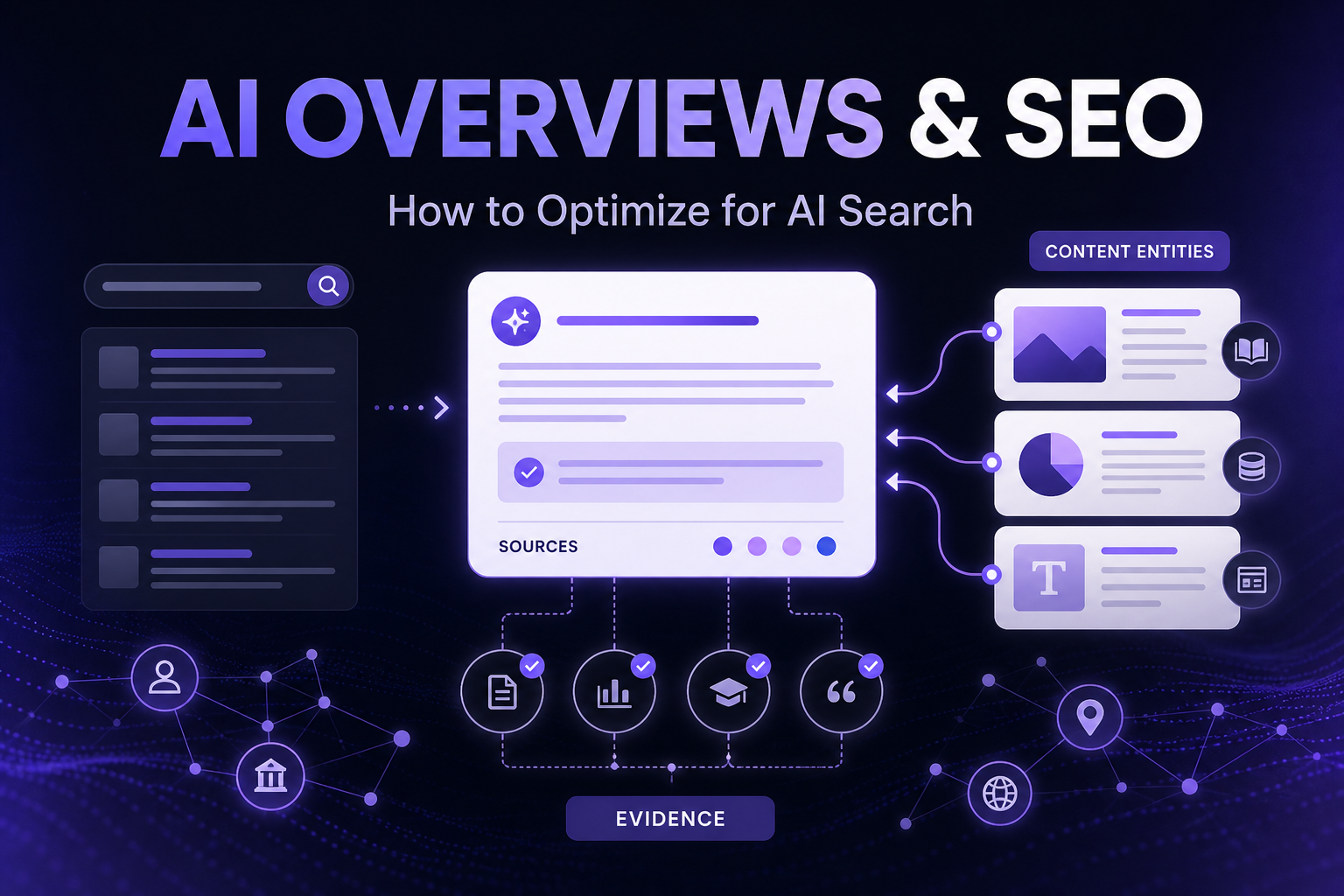
Search increasingly presents synthesized answers before users reach a classic list of blue links. Google AI Overviews can summarize information for some queries, while AI Mode and other AI search products may answer questions using cited web content. That changes how people consume information — but it does not eliminate the need for crawlable, indexable, useful and trustworthy websites.
The goal is not “write for robots.” The goal is to make important information easier for both humans and search systems to understand, verify and reuse. This guide explains what Google AI Overviews are, how they relate to traditional SEO, and what businesses should actually do — without promising AI Overview inclusion or inventing ranking shortcuts.
How should businesses optimize for AI search?
Businesses should optimize for AI search by first maintaining strong traditional SEO fundamentals: crawlability, indexability, clear page intent, useful content and trustworthy information. On top of that, make important answers easy to extract through concise definitions, descriptive headings, tables, comparisons, FAQs where useful, clear entity information and verifiable evidence. Google’s generative AI features on Search rely on core Search systems and retrieval from the Search index, so unique expertise, original examples and consistent brand signals can make content more useful and credible. No technique guarantees inclusion in AI-generated answers.
Key takeaways
- Traditional SEO remains foundational for Google AI features.
- Answer important questions directly, then elaborate.
- Use clear entities and consistent factual information.
- Demonstrate experience and evidence — not commodity summaries.
- Structure content for human clarity and extractability.
- Cite primary sources for factual claims.
- Avoid scaled, generic AI-generated content meant mainly to manipulate search.
- Measure visibility beyond blue-link rankings when tools allow.
What are Google AI Overviews?
According to Google Search Central, AI Overviews help people get to the gist of a complicated topic or question more quickly and provide a jumping-off point to explore links and learn more. They are designed to appear on queries where Google’s systems determine they add value beyond classic Search results — and they often do not trigger.
AI Mode is a related Google Search experience for deeper exploration, reasoning and complex comparisons. People can ask nuanced questions and get an AI-powered response with links to supporting websites. Both AI Overviews and AI Mode may use a “query fan-out” technique — issuing multiple related searches across subtopics and data sources — while generating a response.
From a site owner’s perspective, pages that appear as supporting links in these features must be indexed and eligible to show in Google Search with a snippet. Google states there are no additional technical requirements beyond Search technical requirements and policies.
AI Overviews vs traditional search
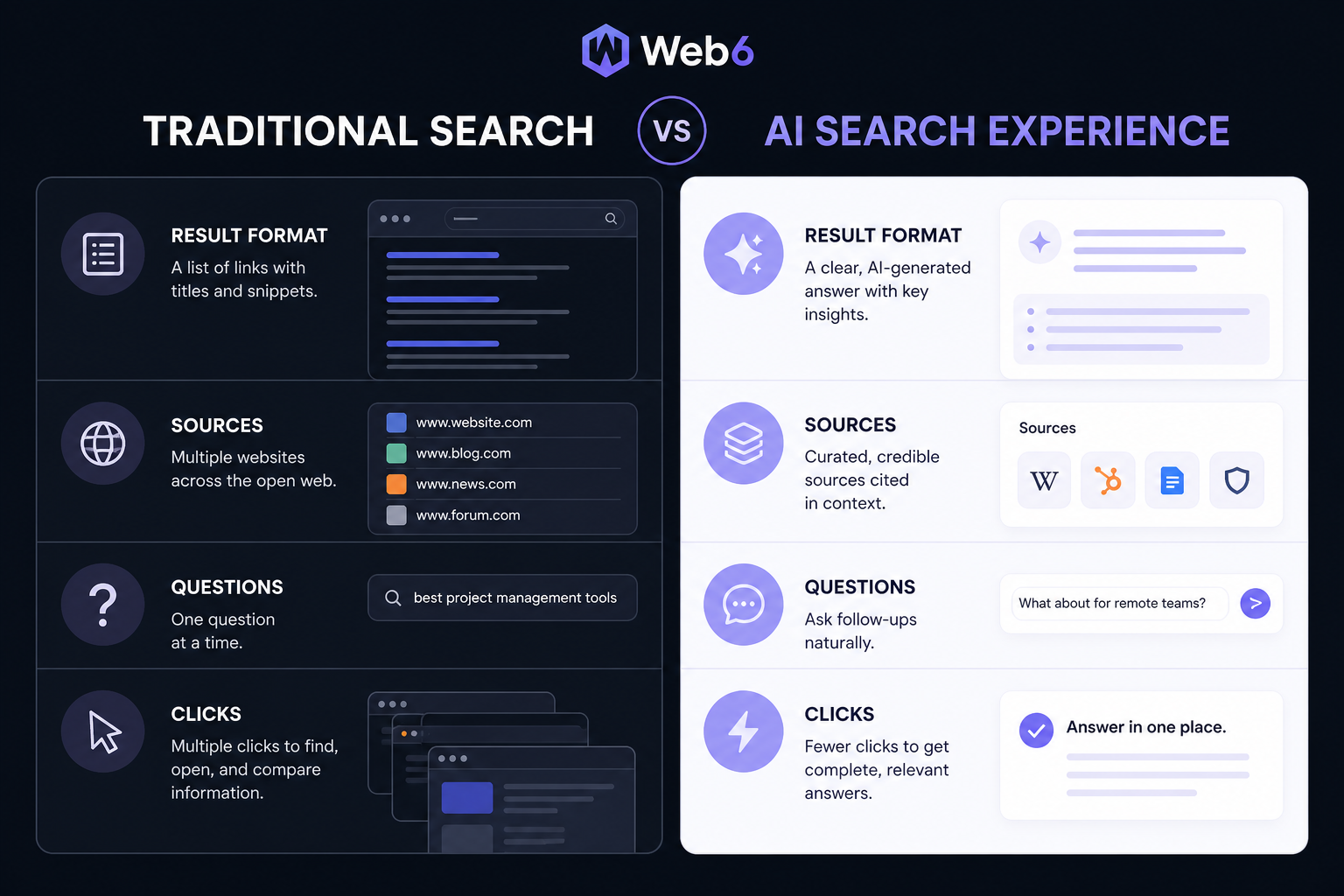
| Factor | Traditional Search | AI-generated Search experience |
|---|---|---|
| User experience | Scan ranked results and choose links | Read a synthesized answer, then explore supporting links |
| Result format | Title, snippet, URL (plus rich results when eligible) | AI summary with associated source links where shown |
| Source discovery | Primarily through ranked listings | Through grounding and supporting links in the AI response |
| Question complexity | Works for many query types | Often stronger for complex or multi-part questions |
| Follow-up behavior | New searches or related queries | AI Mode supports conversational follow-ups |
| Click behavior | Users click results that look relevant | Some needs may be partially met before a click; clicks may still be high quality when they happen |
| Content extraction | Snippets and titles matter | Systems may retrieve and synthesize passages from indexed pages |
| Source attribution | Each result attributed to its URL | Supporting links help users evaluate sources behind the summary |
Traditional search is not disappearing. AI features sit alongside classic results and depend on the same underlying need: useful, accessible pages in Google’s index.
Does traditional SEO still matter in the age of AI search?
Yes. Google’s own optimizing guide for generative AI features states that SEO remains relevant because those features are rooted in core Search ranking and quality systems. They use techniques such as retrieval-augmented generation (grounding) to retrieve relevant pages from the Search index and review information from those pages when generating responses.
That means SEO fundamentals still affect whether search systems can crawl, index, understand, retrieve and trust your content:
- Technical SEO and crawlability
- Clear content matched to search intent
- Internal linking and discoverability
- Page experience
- Helpful, people-first writing
- Structured data where it accurately matches visible content
- Business and product information quality (for local and ecommerce contexts)
Do not assume AI systems simply reuse a static “top 10” list. Query fan-out can surface a wider set of supporting pages than a classic results list alone.
SEO vs AEO vs GEO: do businesses need three separate strategies?
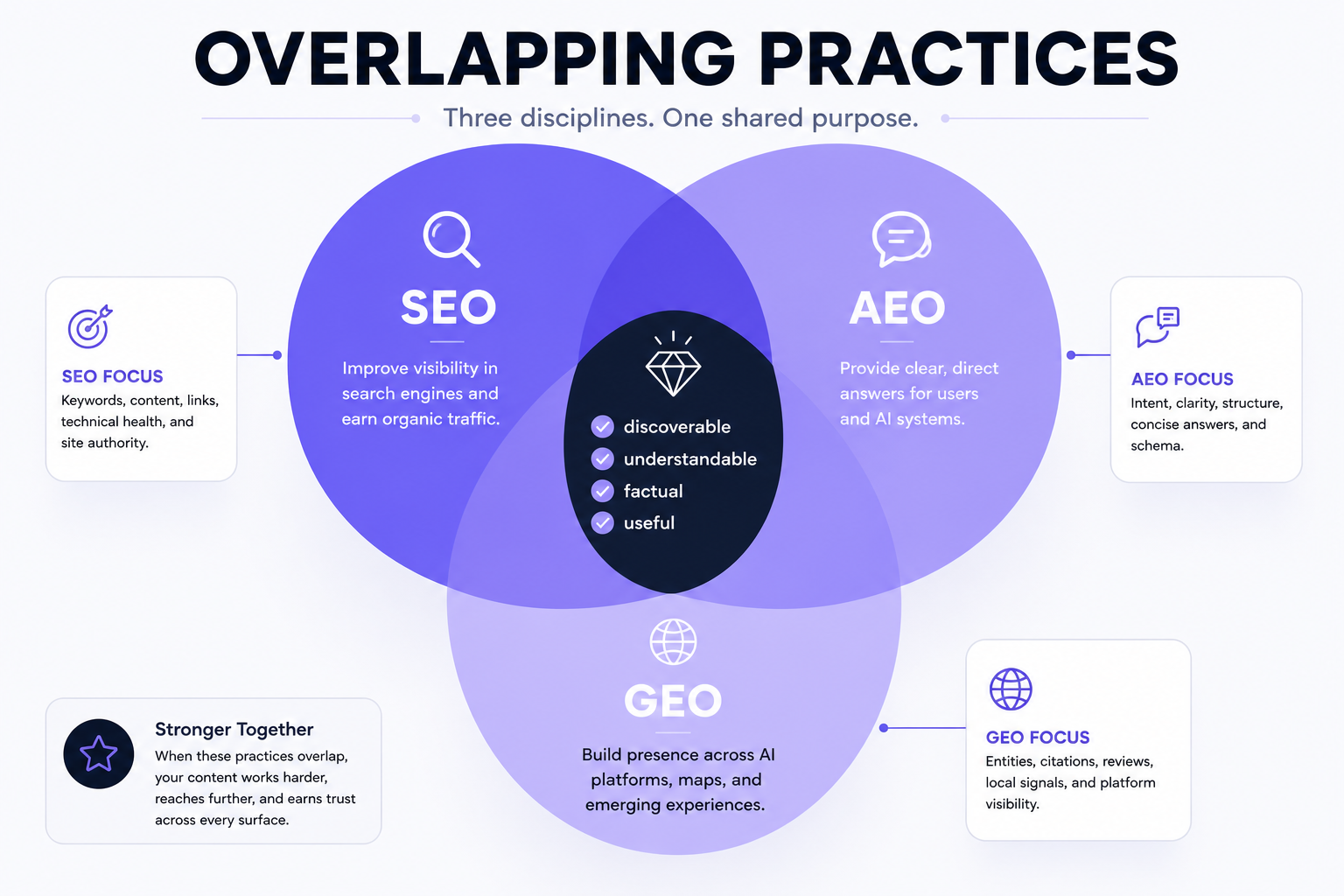
| Term | Meaning | Practical importance |
|---|---|---|
| SEO | Search engine optimization | Official Google guidance centers here for Search including AI features |
| AEO | Answer engine optimization (industry term) | Describes clearer answers; overlaps heavily with good SEO content design |
| GEO | Generative engine optimization (industry term) | Marketing label for generative AI visibility; not a separate Google ranking system |
| AI Overview | Google AI summary feature in Search (when shown) | Eligibility starts with indexed, snippet-eligible pages |
| Entity | Recognizable real-world concept, brand, person or product | Consistency reduces ambiguity for people and systems |
| Structured data | Machine-readable markup (for example JSON-LD) | Helps rich results eligibility; not a special AI Overview requirement |
| LLM | Large language model | Underlying model technology; not a reason to invent “LLM meta tags” |
Google notes that terms like AEO and GEO are common online, and warns against many related “hacks.” For Google Search, high-quality practices still overlap: content should be discoverable, understandable, factual, structured, useful and attributable. Do not create duplicate “GEO pages” solely for AI systems.
What makes content easier for AI search systems to understand?
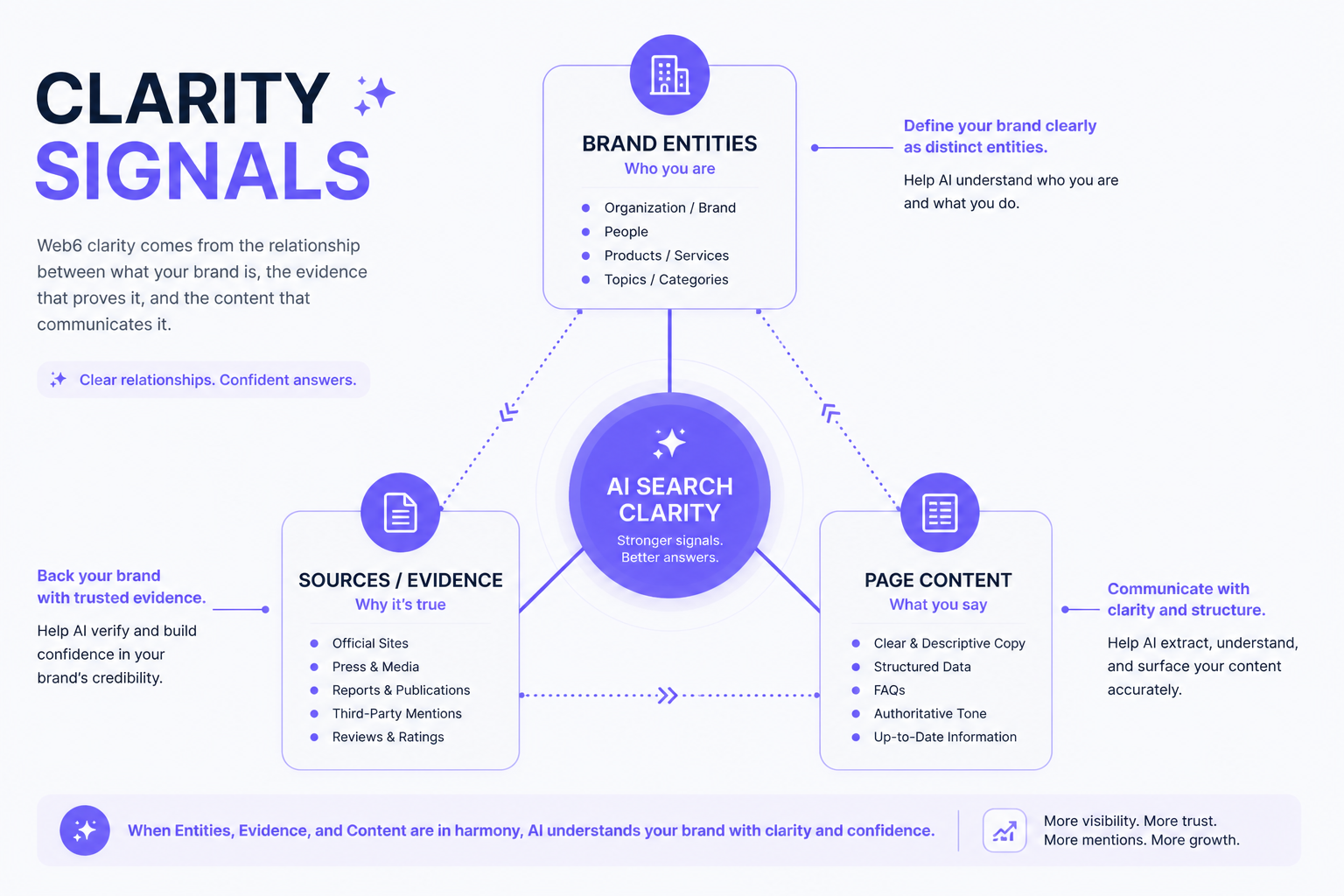
No single factor guarantees citation. Content that tends to be easier to understand and reuse usually has:
- A clear topic and intent
- Explicit definitions where concepts matter
- Meaningful headings
- Contextual entities (brand, product, place, service)
- Factual consistency across the site
- Evidence for important claims
- Structured organization (sections, lists, tables when comparisons help)
- Important information available as text
- Internally connected related pages
- Accurate machine-readable metadata where appropriate
1. Answer the main question early
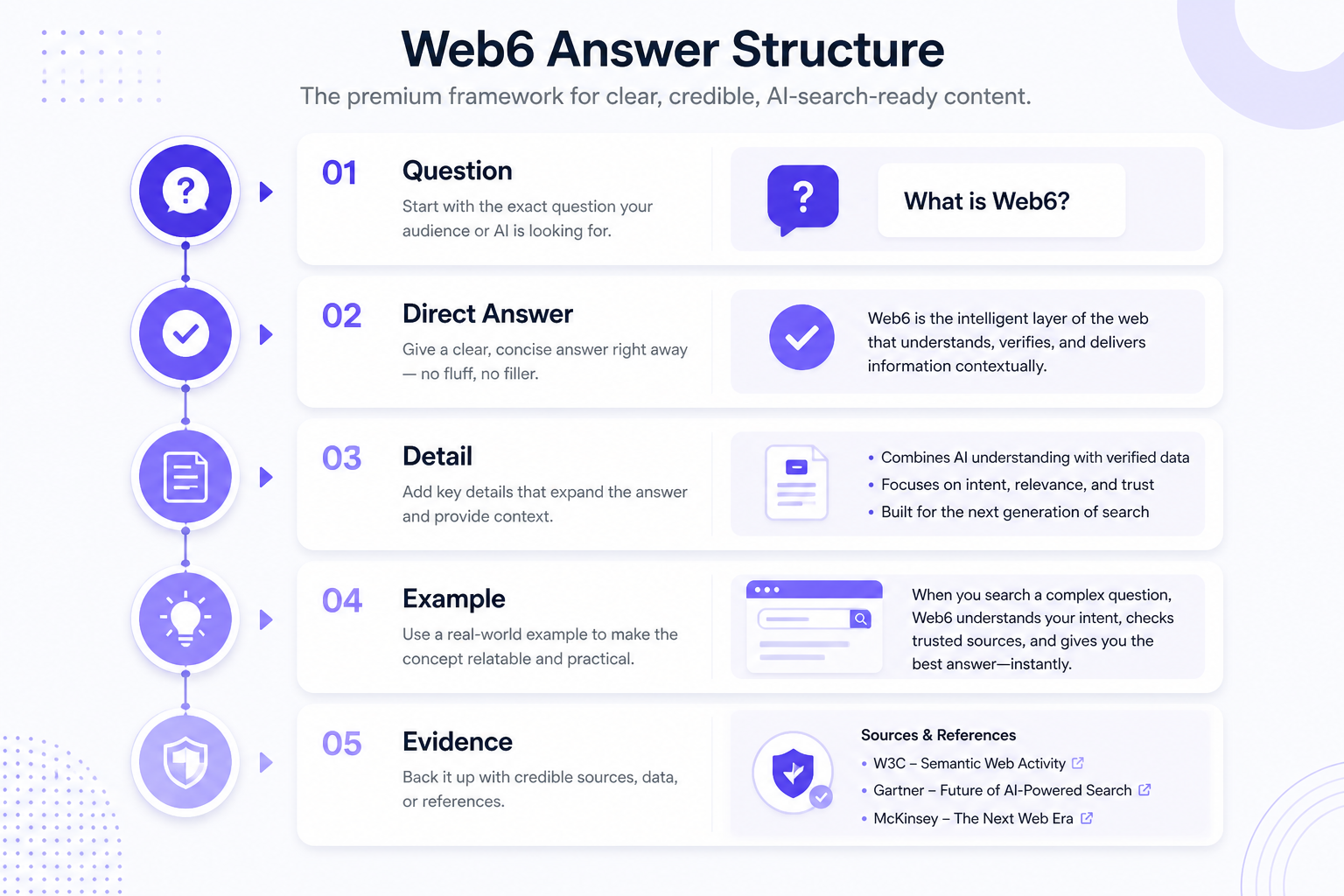
Use an answer-first pattern:
Question → direct answer → detail → example → evidence
Example: under “What is ecommerce SEO?”, open with a concise definition, then explain process, examples and implementation. This helps users skim and makes key passages easier to retrieve. It is a usefulness pattern — not a secret ranking formula.
2. Use headings that reflect real user questions
Weak headings like “Our Innovative Methodology” or “Why Choose Us” hide meaning. Better headings describe the reader’s question: “How does Shopify SEO work?” or “What should an ecommerce SEO service include?”
Descriptive headings improve navigation for people and clarify section topics for retrieval. Do not turn every heading into an exact-match keyword string.
3. Use definitions, tables and processes where they help
Important concepts deserve concise definitions (roughly 40–100 words when useful) — local SEO, Core Web Vitals, canonical tags, custom CRM — without turning the page into a dictionary.
Comparison tables help when users are choosing between options (SEO vs Google Ads, public vs custom Shopify apps, local vs national SEO). Tables summarize structured differences; they are not universally preferred by every AI system.
Numbered lists help when order matters: audits, migrations, setup sequences. Avoid inventing “15 steps” only for SEO theater.
4. Support important claims with evidence
Useful evidence includes official documentation, industry research with context, first-party data, experiments, case studies, screenshots, original examples and product documentation. Do not publish unsupported claims such as “AI search increased conversions by 300%” without real measurement and context.
Cite primary sources for statistics, platform features, technical standards and policy guidance. Do not cite competitors merely to look authoritative.
5. Add information AI cannot easily reproduce from generic summaries
Original experience is a major differentiator. Examples include project lessons, technical decisions, screenshots, implementation trade-offs, original testing, proprietary tools, first-party data, real app development experience and honest case studies.
Google’s generative AI optimization guidance emphasizes unique viewpoints and non-commodity content — first-hand detail that goes beyond restating what already exists across the web.
6. Strengthen experience, expertise and trust
EEAT (experience, expertise, authoritativeness, trustworthiness) describes qualities Google associates with helpful, reliable content. It is not a public “score” you can buy or a single ranking factor number.
- Experience: show real implementation, not only theory
- Expertise: explain accurately and precisely
- Authoritativeness: earn recognition through useful work and coherent coverage
- Trust: accurate identity, policies, authorship and claims
For a development and SEO studio, credible signals can include real Shopify apps, case studies, Google reviews shown from centralized data, clear contact details and technical tools — never fabricated authors or metrics.
7. Make authorship and entities unambiguous
Useful author signals may include a real name or editorial team, relevant expertise and a responsible publisher. Do not invent biographies.
Entities are the real-world things your content is about — for example, Web6 connected to Surat, Shopify development, Shopify apps, CRM development and SEO services. Keep brand names, addresses, product names and service names consistent. Conflicting facts (different addresses, app names or review counts) create confusion for people and systems. Centralize business facts where possible.
8. Use structured data where it accurately represents visible content
Appropriate schema may include Organization, WebSite, WebPage, Article/BlogPosting, BreadcrumbList, SoftwareApplication, Service or LocalBusiness — when valid for the page. Google’s AI features documentation says structured data should match visible text. Google’s generative AI optimization guide also states structured data is not required for generative AI search and there is no special schema.org markup you need for AI Overviews — though structured data remains useful for rich-result eligibility overall.
Validate with tools such as Web6’s schema generator and FAQ schema generator, then confirm against Google’s documentation. Do not mark up content users cannot see.
FAQ schema reality check
Visible FAQ sections can still help users and organize answers. Do not assume FAQ schema automatically creates rich results or AI Overview citations. Eligibility for rich results is decided by Google based on guidelines, page content and feature support.
9. Build clear relationships between related pages
Connect a main service page to supporting guides, case studies and tools with descriptive anchors. Example path for SEO topics: SEO services can relate to local SEO, ranking diagnosis, pricing and AI-search guidance — each page owning a distinct intent.
One page cannot deeply establish expertise across an entire subject. Cover the decision, not only the definition: when to use a solution, trade-offs, process and examples — without bloating every URL.
10. Keep search intent correct
AI-friendly structure does not override intent:
- “SEO company in Surat” → commercial service page
- “SEO cost in Surat” → pricing guide
- “why website not ranking” → diagnostic guide
- “what is local SEO” → informational content / local checklist
Do not convert every commercial page into a pure encyclopedia because AI systems answer questions.
11. Use first-party data and useful tools when you genuinely have them
Publish first-party data only when it is real, privacy-safe and contextualized. Free tools — schema generators, robots.txt helpers, meta tag builders, image compressors — can demonstrate practical expertise and attract discovery. They do not automatically improve AI visibility.
12. Publish credible case studies and consistent brand signals
Strong case studies cover problem, context, approach, implementation, outcome and limitations. Avoid fabricated metrics and unverifiable “10X growth” claims.
Brand clarity improves when the same business identity appears consistently across the official website, app marketplaces, business profiles and trustworthy third-party mentions. Digital PR through original research, useful resources and real product launches can help — mass guest-post spam does not. Mentions alone do not guarantee AI citations.
13. Keep pages fast, accessible and readable
Mobile UX, Core Web Vitals, lean JavaScript, image optimization, readability and accessibility help people who click through. Faster pages do not guarantee AI Overview inclusion. For Astro, Next.js and React sites, ensure important SEO content is crawlable and indexable; follow JavaScript SEO best practices rather than assuming client-rendered apps cannot rank.
14. AI visibility starts with crawlability and indexing
If a page cannot be crawled or indexed, optimization for Google Search-based AI experiences is irrelevant. Google requires indexed, snippet-eligible pages for supporting links in AI Overviews and AI Mode.
Check robots rules, noindex, canonicals, status codes, internal links and sitemaps. For diagnosis workflows, see why your website is not ranking on Google. For a full pre-content technical pass, use the technical SEO audit checklist. Use a robots.txt generator carefully — and verify directives against Google’s crawler documentation before blocking anything.
Should businesses block AI crawlers?
This is a business and content-policy decision, not a default SEO tactic. Different tokens and controls serve different purposes:
- Googlebot / robots.txt: primary control for how Google crawls for Search. AI is built into Search; Google documents robots.txt for Googlebot as the crawl control for Search.
- Snippet controls: nosnippet, data-nosnippet, max-snippet or noindex limit how information from pages can appear in Search (including AI features that rely on Search).
- Google-Extended: a robots.txt product token publishers can use to manage whether content may be used for certain Gemini model training and some grounding contexts outside Search ranking. Google states Google-Extended does not impact inclusion in Google Search and is not used as a ranking signal in Search.
- Search generative AI control (Search Console): where available, site owners can include or exclude their site’s links and content from Search generative AI features (such as AI Overviews and AI Mode). Exclusion removes visibility and impressions from those features; Google states the control is not used as a ranking signal for search results outside those generative AI features. Rollout availability can vary by property.
Verify current official documentation before naming or blocking crawlers. Do not rely on outdated third-party crawler lists.
Does llms.txt improve AI rankings?
No established Google Search ranking benefit. Google’s generative AI optimization guide states you do not need llms.txt or other special AI text files for Google Search (including generative AI capabilities), because Google Search itself does not use them.
Some sites still publish an llms.txt-style map as an optional guide for systems that choose to read it. Treat it as supplemental documentation — never as a substitute for crawlable pages, sitemaps, internal links and clear content. Web6 maintains machine-readable site guidance for discovery contexts, but it is not a Google AI Overview ranking lever.
15. Titles, canonicals and genuine freshness still matter
Titles and meta descriptions remain useful for page understanding and classic search presentation; AI systems can also use broader page content. Do not invent unofficial “AI meta tags.”
Canonical consistency helps consolidate duplicate versions. Canonicalization is not a direct “AI citation factor.”
Update time-sensitive content — platform pricing, APIs, Google features, software UIs — when facts change. Do not change dates without changing substance.
Can AI-generated content appear in AI Overviews?
Google’s long-standing guidance focuses on content quality and purpose, not the writing tool alone. Using AI or automation to generate content primarily to manipulate search rankings violates spam policies. Appropriate use of AI assistance is not automatically banned.
Risks rise when content becomes low value, inaccurate, scaled without oversight, repetitive, copied, search-engine-first or lacking original expertise. Human review is essential for technical claims, legal/financial/medical topics, statistics, company data, pricing and product features.
A practical content structure for AI-search readiness
Useful structure (not a rigid formula):
- H1 for the main query
- Short intro
- Direct answer
- Key takeaways
- Definition / how it works
- When to use / comparisons
- Process
- Evidence and examples
- Common mistakes
- FAQs
- Conclusion
How should service pages be optimized for AI search?
Service pages should stay commercial — not become encyclopedias. Helpful elements include a clear H1, direct service explanation, who it is for, problems solved, process, technologies, decision guidance, trade-offs, case studies, FAQs, company proof and a CTA. For execution support, see SEO services in Surat and related digital marketing work.
Blogs should answer distinct informational intent, support commercial pages with original insight, link to deeper resources and avoid duplicating service-page intent. Provider selection belongs on guides like how to choose an SEO company.
How should ecommerce businesses prepare for AI search?
Ecommerce readiness overlaps ecommerce SEO: product and category clarity, attributes, accurate structured data, availability, useful descriptions, genuine reviews, comparison content, buying guides, merchant trust, image quality and crawlability. Schema does not guarantee AI product recommendations.
Shopify merchants should also watch collection architecture, theme and app performance, product information completeness and internal linking from guides to money pages. For implementation depth, use the ecommerce SEO Surat playbook and related ecommerce or Shopify development capabilities. Google also notes Merchant Center and Business Profile details can help products and local businesses appear in relevant Search experiences, including some generative responses where appropriate.
Local businesses and AI search
Local readiness still depends on consistent business information, Google Business Profile quality, reviews, service clarity, location accuracy and useful local website content. AI search does not replace Maps or local SEO fundamentals. Follow the local SEO checklist for Surat businesses for implementation steps.
What makes a page more citation-worthy?
There is no published formula. Pages that are easier to cite often combine a clear factual statement, original data or primary evidence, specific expertise, transparent sourcing, a concise answer and relevant context. Treat that as quality guidance — not a guarantee.
AI search optimization mistakes to avoid
- Writing hundreds of generic AI articles
- Creating separate duplicate “GEO” pages
- Keyword stuffing AI/LLM/GEO terms
- Fabricating statistics
- Fake authors
- Fake reviews
- Rewriting competitors without original value
- Hiding important content in inaccessible UI
- Using schema for invisible content
- Treating llms.txt as a Google ranking shortcut
- Optimizing only FAQs
- Ignoring traditional SEO
- Publishing unsupported AI Overview claims
- Creating fake “AI citations”
- Updating dates without content changes
AI search readiness checklist
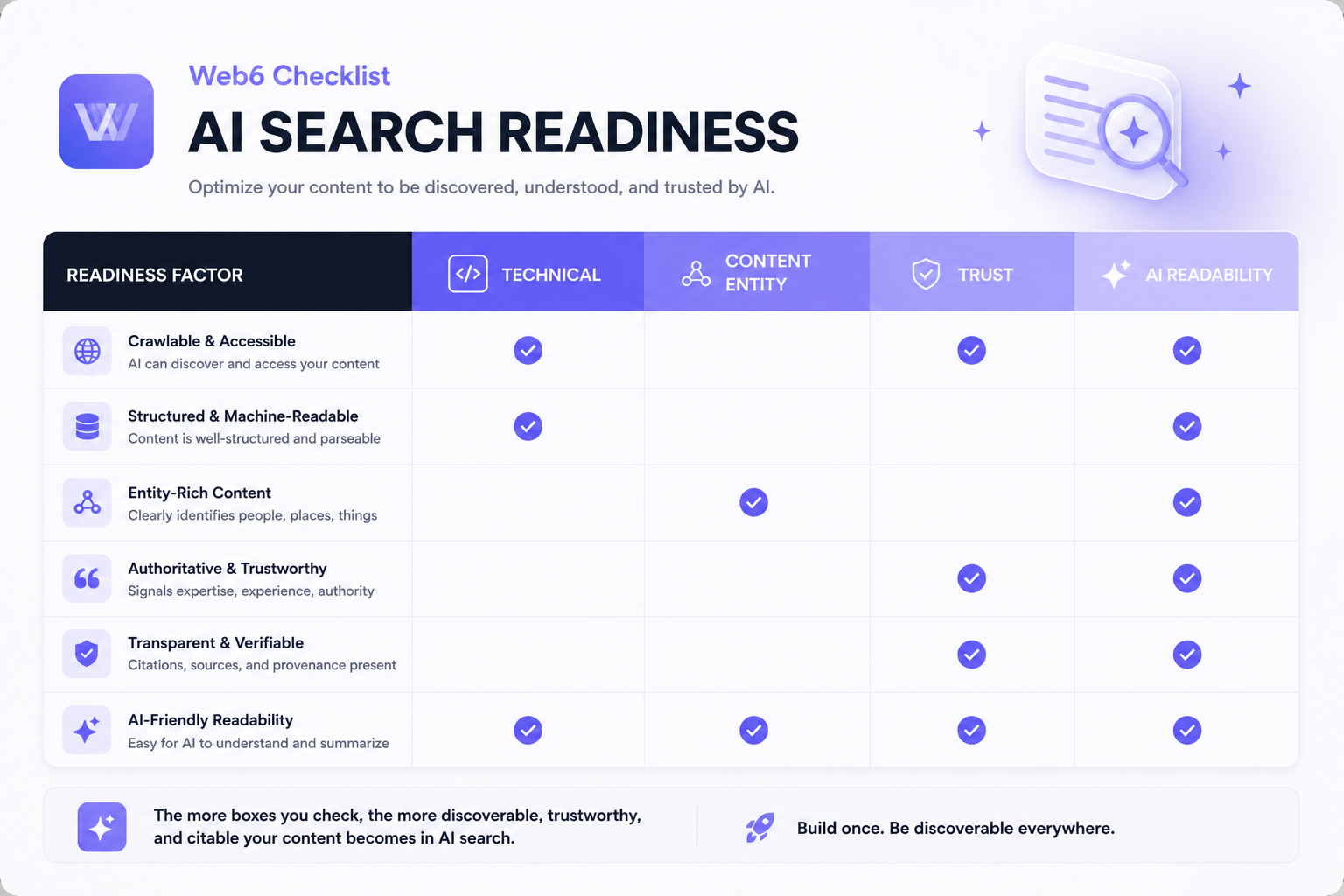
Technical
- Important pages indexable
- Correct canonical
- Clean internal links
- Sitemap current
- Mobile-friendly
- Performance acceptable
Content
- Main question answered directly
- Intent clear
- Descriptive headings
- Useful comparison/table where relevant
- Evidence included
- Original insights included
- Content fact-checked
Entity / trust
- Business details consistent
- Author/publisher clear
- Genuine reviews only
- Real case studies
- Correct structured data
- Sources used for factual claims
AI readability
- Important definitions concise
- Lists/processes structured
- Tables understandable
- No excessive jargon
- Critical content visible in HTML
- Related pages internally linked
How should businesses measure AI search visibility?
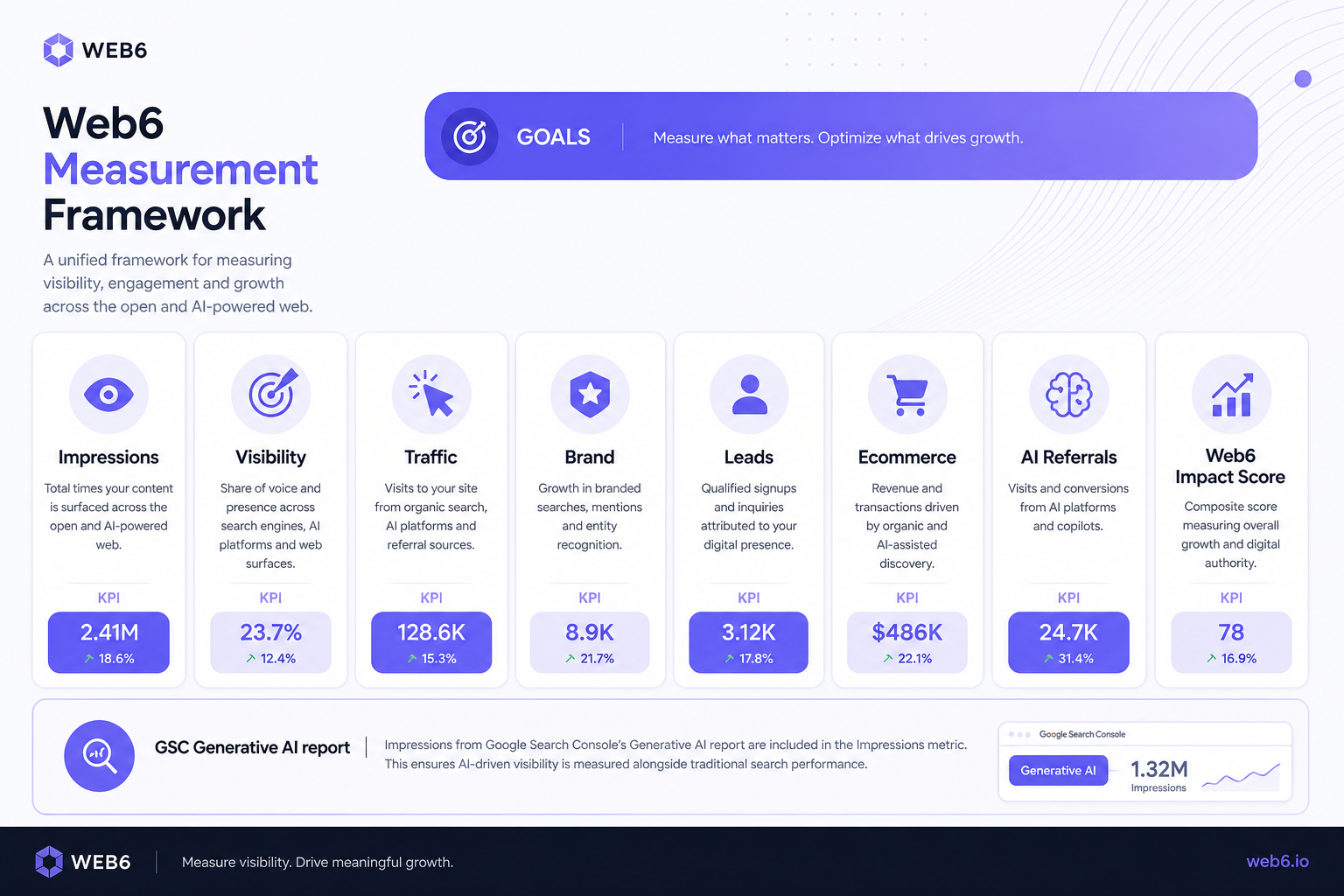
Start with Google Search Console. Sites appearing in AI features are included in overall Search traffic in the Performance report (Web search type). In June 2026, Google also launched dedicated Generative AI performance reports for Search and Discover. Those reports (rolling out over time) focus on impressions, pages, countries, devices and dates for generative AI features such as AI Overviews and AI Mode. Click and query breakouts may not be available in the dedicated report depending on current product status — verify inside your Search Console property.
Also track organic sessions, landing pages, conversions, branded search demand and referral traffic from AI products when analytics identifies it. Manual SERP checks are directional only. Third-party AI-visibility tools can be supplementary; treat them cautiously.
| Goal | Possible measurement |
|---|---|
| Search visibility | Impressions / Generative AI report impressions where available |
| Traffic | Organic and identifiable referral sessions |
| Brand demand | Branded queries |
| Lead generation | Forms, calls, qualified leads |
| Ecommerce | Revenue and conversions from organic landers |
| AI referral visibility | Referral sources when present in analytics |
| Citations | Manual/third-party monitoring with clear limitations |
Some experiences answer more before the click. Measure visibility, brand demand and conversions — not only raw clicks. Avoid unsupported industry CTR-loss percentages unless you cite a specific study with methodology.
ChatGPT, Gemini, Perplexity and other AI search products
Each system has different retrieval, citation and publisher controls. Do not assume one Google-focused tactic works identically across ChatGPT, Gemini apps, Perplexity or Claude. For Google Search specifically, follow Search Central guidance. For other products, consult that product’s official publisher or crawler documentation before making claims about ranking, citations or crawling.
SEO vs AI search — priority order
- Fix crawl/index problems
- Align page with search intent
- Improve content quality
- Add evidence and expertise
- Strengthen internal relationships
- Clarify entities
- Add appropriate structured data
- Improve page experience
- Monitor traditional + generative AI discovery
- Iterate based on evidence
Common AI SEO myths
- Myth: Traditional SEO is dead. Reality: Google says generative AI features rely on core Search systems; fundamentals remain important.
- Myth: FAQ schema guarantees AI citations. Reality: No guarantee.
- Myth: An llms.txt file makes ChatGPT or Google rank you. Reality: Google Search does not use llms.txt; other products may or may not read optional files.
- Myth: AI-generated content cannot appear in Search. Reality: Quality and spam-policy compliance matter more than the writing tool alone.
- Myth: You need to mention “AI” everywhere. Reality: Relevance and usefulness matter.
- Myth: AI systems always cite the #1 Google result. Reality: Unsupported; query fan-out can surface a wider set of pages.
30-day AI search readiness plan
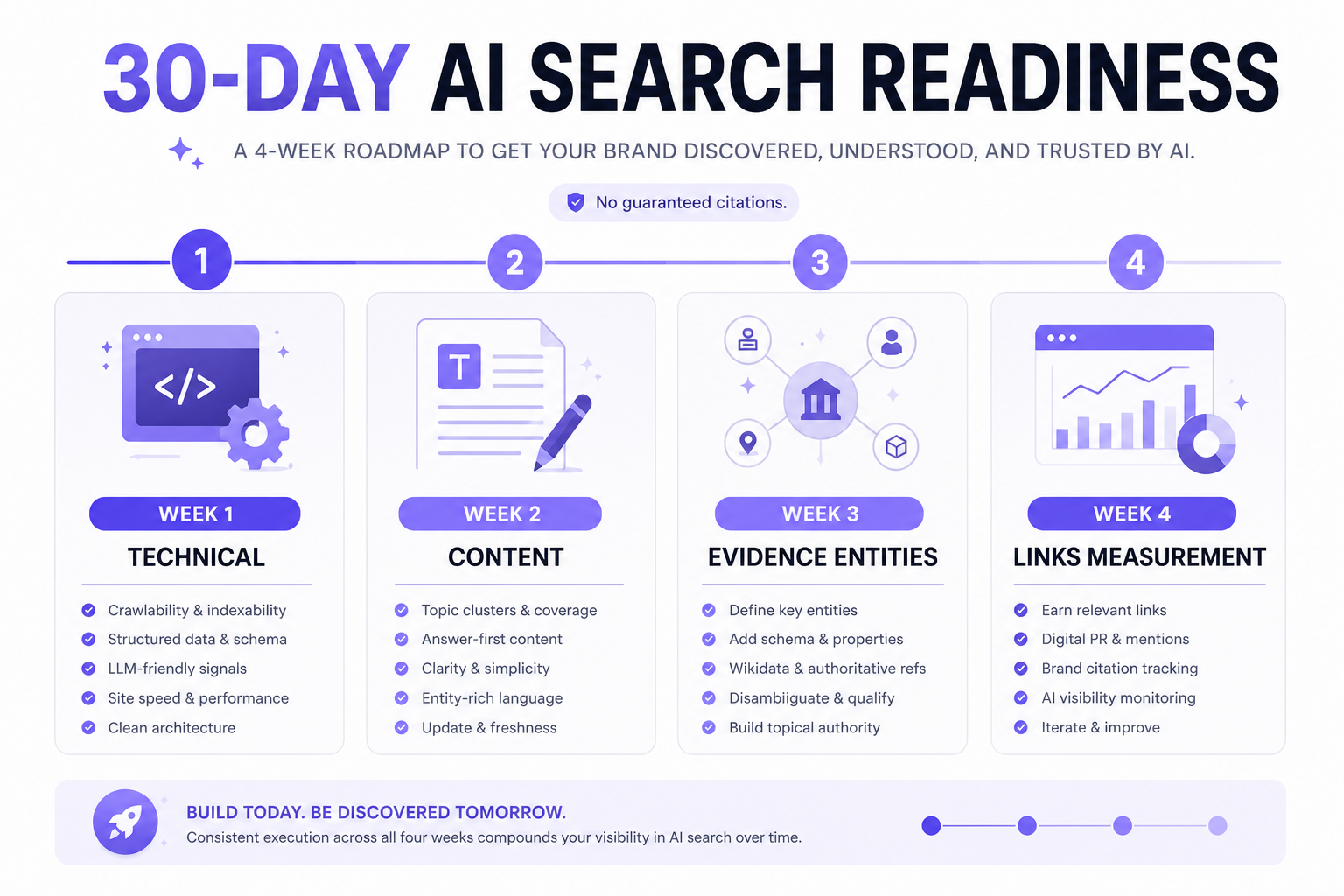
Week 1 — Technical foundation: indexability, canonicals, sitemap, robots, major performance issues.
Week 2 — Content and intent: important questions, direct answers, remove thin/repetitive pages, improve headings.
Week 3 — Evidence and entities: authorship, business facts, reviews, case studies, sources, structured data.
Week 4 — Connections and measurement: internal links, supporting content, analytics, Search Console baseline, Generative AI report access where available.
This plan improves readiness. It does not promise AI citations in 30 days.
What to update first
- High-value commercial pages
- Strong informational pages with existing visibility
- Supporting topical content
Do not rewrite the entire site for AI search at once.
How Web6 approaches AI-search-ready SEO
Web6 treats AI-search readiness as an extension of technical SEO, content quality, entity clarity and trust — not a separate “GEO hack.” A typical approach:
- Technical and indexing audit
- Search intent mapping
- Content quality review
- Entity and trust review
- Answer-structure improvements
- Internal linking
- Schema validation where appropriate
- Evidence and source improvements
- Performance
- Measurement in Search Console and analytics
Capabilities that support this work include web and custom website development, Shopify and ecommerce engineering, published Shopify apps and practical SEO tools — used as real delivery context, not as invented AI Overview case studies.
Primary sources referenced
- Google Search Central: AI features and your website
- Google Search Central: Optimizing for generative AI features on Google Search
- Google Search Central Blog (3 June 2026): Search Generative AI performance reports
- Search Console Help: Generative AI performance report (Search)
- Search Console Help: Search generative AI control
- Google Search Central: guidance on helpful, people-first content and AI-generated content
Product behavior and Search Console availability can change. Re-check official documentation when making operational decisions.
Frequently asked questions
What are Google AI Overviews?
AI Overviews are Google Search AI summaries that help people grasp complex topics quickly and explore supporting links. They appear when Google’s systems determine they add value beyond classic results.
Do AI Overviews replace traditional SEO?
No. Google states generative AI features on Search are rooted in core Search ranking and quality systems. Crawlability, indexability, useful content and trust still matter.
How can my website appear in an AI Overview?
Be indexed and snippet-eligible in Google Search, follow Search policies and create helpful people-first content. Google says there are no additional technical requirements. Inclusion is not guaranteed.
Can businesses optimize specifically for AI search?
Yes, by strengthening SEO fundamentals and making answers clearer, more evidenced and more entity-consistent — not by inventing separate GEO hacks.
What is the difference between SEO, AEO and GEO?
SEO is search engine optimization. AEO and GEO are industry labels for answer/generative visibility. For Google Search, practices largely overlap with quality SEO.
Does schema markup help AI Overviews?
Structured data can help search systems understand page content and support rich results when eligible. Google says it is not required for generative AI features and there is no special AI Overview schema.
Does EEAT matter for AI search?
Experience, expertise, authoritativeness and trust remain useful quality concepts for helpful content. They are not a public score you can purchase.
Can AI-generated content rank in Google?
Quality and intent matter more than the tool. Content created primarily to manipulate rankings violates spam policies. AI assistance used to create helpful original content is not automatically banned.
Does llms.txt help AI visibility?
Google Search does not use llms.txt for generative AI features. Optional files may help other systems that choose to read them, but they are not a Google ranking shortcut.
Do backlinks still matter for AI search?
Google’s generative AI features depend on core Search systems that evaluate content quality and can block spam. Relevant, high-quality mentions can support authority; spammy link schemes remain risky. There is no “AI-only backlink package.”
How do I measure traffic from AI search?
Use Search Console Performance (Web) plus the Generative AI performance report where available for impressions. Track analytics conversions and any identifiable AI referrals. Expect measurement gaps.
Should ecommerce websites change their SEO strategy for AI?
Extend — don’t replace — ecommerce SEO: clearer product/category information, trust, structured data accuracy, guides and technical crawlability. See the ecommerce SEO playbook for store-specific tactics.
Need help preparing your website for traditional and AI-powered search?
AI-search readiness should build on strong technical SEO, useful content and clear business/entity information rather than replacing them. If you want a discovery-led assessment, explore our SEO services.
Build clarity, not shortcuts
Google AI Overviews and related AI search experiences change how answers are presented, not the need for trustworthy websites. Prioritize indexable pages, distinct intent, original evidence, consistent entities and honest measurement. Treat AEO/GEO labels as reminders to write clearer answers — not as a reason to abandon SEO fundamentals or invent unsupported ranking tactics.