
CRM
Custom CRM for Real Estate in India
Written by Web6 Editorial Team · Published 29 October 2026 · 8 min read
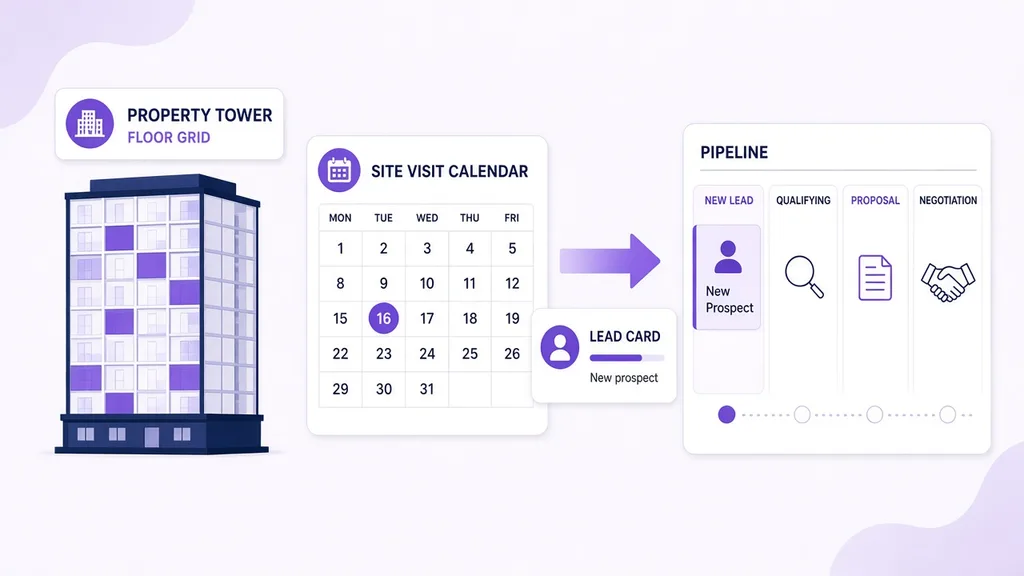
A custom CRM for real estate in India has to do work a generic sales CRM does not have objects for: which flat is free, who spoke to the buyer first, when the site visit is, and which channel partner gets paid. Property portals, walk-ins and WhatsApp all create the same person twice. The CRM that cannot block a unit and cannot tell a broker lead from a direct lead becomes another sheet the sales head keeps on the side.
Web6 has built this shape of system. The write-up is the real estate CRM case study: a Gujarat firm, 14 weeks, Laravel and React, site-visit calendars, unit inventory, broker versus direct ownership, duplicate checks on phone number, and WhatsApp enquiry logging. This article is the buying guide around that kind of build. The company page is custom CRM development company in India.
What should a real estate CRM in India include?
Version one for a broker team is lead capture from every source, de-duplication, assignment, a site-visit calendar and a simple project pipeline. A developer with live inventory also needs a unit grid, a temporary block, a cost sheet and a channel-partner record. Collections, demand letters and a customer app can wait until the sales floor is actually using the first release.
Objects a generic CRM does not have
- Project and unit. Tower, floor, flat, status: available, blocked, booked, registered. A block expires. Two people cannot sell the same unit because two WhatsApp groups said it was free.
- Lead source and owner. 99acres, MagicBricks, Housing.com, Meta lead ads, the project site, a walk-in, a channel partner. The first valid owner is a rule, not a debate in the Monday meeting.
- Site visit. Executive, project, time, confirmation, no-show. A visit that double-books a closer is a failed CRM even if the pipeline chart looks full.
- Channel partner. Who brought the buyer, the agreed brokerage, and whether it is in writing. Commission remembered in a diary does not survive a new sales head.
- Cost sheet. Unit rate, floor rise, parking, GST and the payment plan. The CRM can generate it. Your lawyer and your accountant still own the agreement and the tax invoice.
The Real Estate (Regulation and Development) Act, 2016 is state-administered. A CRM can store a project registration number and the documents you already have. It does not file returns with the state authority unless you build that workflow and check it against the portal you actually use. Do not buy a "RERA module" that is only a folder of PDFs.
Rules worth writing down before anyone designs a screen
- Duplicate. Same phone number and same project is one buyer. A second portal lead attaches to that record and keeps its source. It does not create a second owner.
- First response. Decide the minute count that counts as "answered", and who is told when it is missed. Speed to the first call is the point of capturing portal leads at all.
- Block. A unit block has an expiry and a person. A block without an expiry is how inventory goes stale by Thursday.
- Partner credit. The partner is stored on the lead at creation. Changing it later needs a manager. Brokerage percent lives on that record, not in a separate sheet.
- Visit. One closer cannot have two visits in the same slot. A no-show creates a follow-up the same day, on the lead, not in someone's personal chat.
These five rules are the CRM. The screens are how you enforce them. A vendor who cannot repeat them back has not started discovery.
A release order that survives contact with the sales floor
- Weeks 1 to the first usable month: all lead sources into one queue, duplicate check on phone, assignment, pipeline stages you already use, site visits.
- Next: unit grid and blocking, cost sheet, booking status, partner attribution.
- Later: demand reminders, a partner login, a buyer login, accounts sync. Each of these is a new audience and a new set of permissions.
Teams that start with the customer app and the partner portal train nobody, because the sales floor still has no single list of today's visits.
What developers publish for real estate CRM cost
Public Indian pages in 2026, read on 4 November 2026, cluster around these planning bands. They are not a Web6 quotation. The general CRM ranges, and how they compare with Zoho, are in custom CRM development cost in India.
| Release | Published band | Usually includes |
|---|---|---|
| Broker or single-project sales CRM | about ₹2.5 lakh – ₹8 lakh | Leads, visits, basic inventory, WhatsApp |
| Developer platform | about ₹8 lakh – ₹15 lakh | Cost sheets, partners, approvals, accounting sync |
| Multi-project with apps and collections | about ₹15 lakh – ₹25 lakh+ | Customer app, partner portal, consolidation |
SaaS property CRMs are a real option for a small brokerage with a standard pipeline. They get awkward when unit blocking, your partner agreement and your cost-sheet maths are the business. Run the same three-year comparison you would for any other CRM, using Zoho CRM vs custom CRM as the method, and add the property objects on top.
WhatsApp is the enquiry channel
Buyers reply on WhatsApp. If the message lives on a closer's personal phone, the firm does not have a lead. A shared inbox on the official WhatsApp Business Platform, tied to the buyer and the project, is the minimum. When to buy a ready inbox and when to build it into the CRM is covered in WhatsApp CRM for Indian businesses.
Frequently asked questions
Can I run a builder's sales on Zoho CRM?
Yes, while leads, calls and a simple stage list are the whole job. Custom modules can hold a project name. Live unit blocking, a cost-sheet engine and partner brokerage rules are where teams either accept workarounds or build those objects themselves.
How do portal leads get in?
Through the portal's API or the lead-delivery method they offer, into one queue, de-duplicated on phone number, then assigned. Email forwarding into a shared inbox is a stopgap, and it will miss fields.
Does the CRM replace the agreement?
No. It can store the booking status and the documents. The sale agreement, stamp and registration stay with your legal process and the state rules that apply to that project.
How long did Web6 take on a real estate CRM?
The published case study was 14 weeks for site visits, unit inventory, broker versus direct lead rules, duplicate prevention and WhatsApp enquiry logging. A collections portal or a customer app would be a later release.
What should version one exclude?
Customer mobile apps, partner self-service, and automated demand letters. Get the sales floor onto one visit list and one unit grid first.