
Growth
Reduce COD RTO on Shopify in India: A Practical Operations Guide
Written by Web6 Editorial Team · Published 2 April 2026 · 32 min read
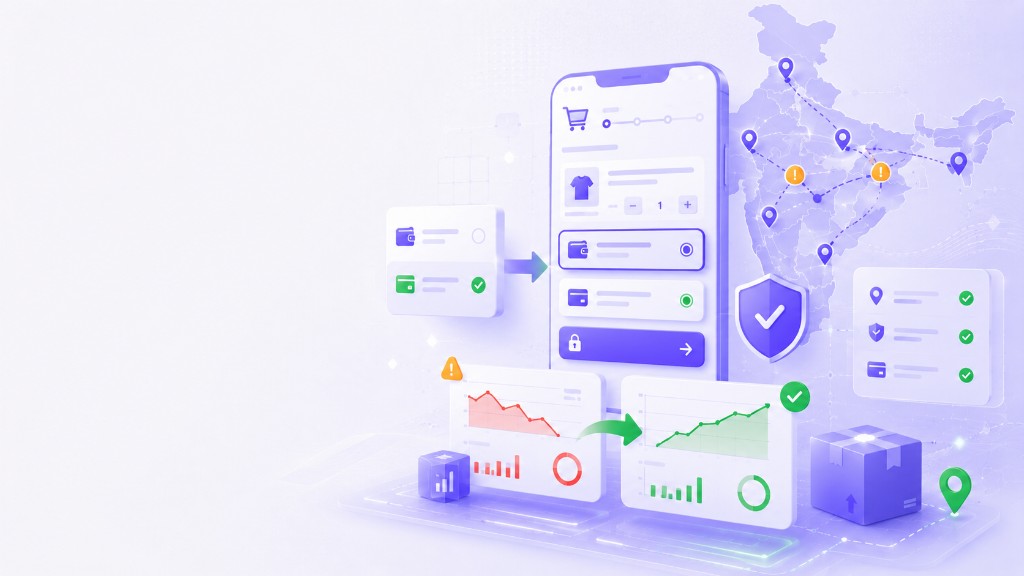
To reduce COD RTO in Shopify stores in India, combine checkout rule controls (pincode, city, state, cart, product, discount, and customer logic), COD fees, prepaid incentives, verification workflows, and courier performance tracking. The goal is not to remove COD completely, but to keep COD available where it converts profitably and restrict it where refusal risk is high.
1) Introduction: why COD still dominates and why RTO hurts fast
Cash on Delivery remains a major payment preference in Indian ecommerce because it reduces perceived buyer risk. For first-time shoppers, COD can feel safer than prepaying on an unfamiliar website. For many categories in fashion, beauty, electronics accessories, and home products, COD is still a real conversion lever.
But COD has an expensive downside: RTO (Return to Origin). When orders are refused, unreachable, or undeliverable, merchants pay forward shipping, reverse shipping, operational handling, support time, and often inventory lock costs. On slim margins, that can erase campaign gains quickly.
This guide is built for practical execution on Shopify. It explains why COD RTO happens in India, how to reduce it with rules and workflows, where native Shopify reaches limits, and when a dedicated app strategy makes sense. You will see specific rule frameworks across geography, products, discounts, shipping behavior, and customer trust signals.
Web6 publishes COD Risk Guard – Pincode Rules for rule-driven COD controls and also delivers Shopify development and custom Shopify app development for advanced implementations. This playbook is vendor-neutral in logic: use any stack that gives reliable control and clean operations.
2) What is COD RTO?
COD RTO means a Cash on Delivery order was shipped to the customer but returned to the seller without successful delivery or payment collection. Common causes include refusal at doorstep, wrong address, unreachable customer, risky serviceable zones, and operational courier delays. For merchants, COD RTO is a margin leak across logistics, support, inventory, and cash flow.
2.1 COD in Shopify context
In Shopify, COD is typically enabled as a manual payment method or controlled through checkout customization patterns (including Functions-based logic via apps or custom development). COD itself is not the problem. The problem is undifferentiated COD availability where risk is uneven across products, zones, customer segments, and campaign periods.
2.2 What counts as RTO in daily operations
- Customer refuses parcel at delivery attempt.
- Address incomplete or wrong; delivery cannot be completed.
- Customer unreachable over repeated attempts.
- Fake/low-intent orders from known risky patterns.
- Courier SLA delays causing trust drop and refusal.
2.3 Merchant impact is cumulative, not isolated
One refused order is manageable. A weekly pattern across zones, discount windows, or high-risk products becomes structural loss. Strong COD management is therefore an operations system, not a one-time checkout tweak.
3) How much does COD RTO actually cost?
COD RTO cost is broader than courier charges. It includes forward shipping, reverse shipping, packaging, order processing, customer support effort, blocked inventory, delayed cash conversion, and lost ad spend used to acquire that order. If you only track courier fees, you under-estimate RTO impact and delay corrective action.
| Cost component | What happens in COD RTO | Why it matters |
|---|---|---|
| Forward shipping | Paid on dispatch even when delivery fails | Immediate logistics expense with no revenue realization |
| Reverse shipping | Parcel returned to origin warehouse | Second logistics hit compounds unit economics |
| Packaging materials | Boxing, labels, inserts consumed | Often ignored but meaningful at scale |
| Support workload | Calls, chat follow-ups, ticket handling | Raises operations overhead and response pressure |
| Inventory blocking | Stock unavailable while in transit cycle | Can delay genuine prepaid demand fulfillment |
| Cash flow delay | No collected payment; longer recoveries | Working capital stress for growth-stage brands |
| Marketing loss | Ad spend generated non-realized order | CAC efficiency drops if refusal rates are high |
| Brand trust cost | Bad delivery experiences, confusion | Affects repeat behavior and referral confidence |
3.1 Why founders often undercount COD RTO
Most teams track “delivered orders” and “returns” but not refusal reasons with COD-specific segmentation. Without reason-level data, policy updates become opinion-driven. A better approach is to classify RTO by cause, geography, courier, and order type so rule changes are evidence-led. To estimate margin impact before changing policy, use the free COD Profit Calculator and the RTO Loss Calculator — they are planning tools, not checkout controls.
4) Top reasons for high COD RTO in India
High COD RTO usually comes from a mix of data quality issues, low-intent ordering behavior, and delivery execution mismatch. The highest-impact causes are wrong addresses, fake or duplicate orders, risky pincodes, refusal at delivery, long shipping timelines, discount abuse, and courier service inconsistency. Each cause needs a separate control strategy.
4.1 Address quality and contact reliability
- Incomplete house numbers, landmarks, or locality spelling errors.
- Wrong phone numbers or unreachable alternate contacts.
- Customers entering temporary addresses during impulse checkout.
4.2 Fraud and abuse patterns
- Fake orders intended to test COD acceptance or cause disruption.
- Repeated COD abuse from known high-risk user patterns.
- Duplicate orders from same buyer session in sale rush.
4.3 Geography-linked refusal risk
- Pincodes with recurring refusal/reachability issues.
- City/state routes with delayed delivery attempts.
- Regions where COD expectation differs by category and price band.
4.4 Checkout and campaign behavior
- Impulse buying during deep discounts with low purchase intent.
- Sale-period COD abuse where orders are parked with no commitment.
- No prepaid incentive leading to COD default behavior.
4.5 Logistics and SLA mismatches
- Courier delay windows that trigger refusal before first attempt.
- Poor attempt communication causing failed handoff timing.
- Inconsistent courier quality across lanes and package types.
5) Complete COD RTO reduction strategies for Shopify (rule by rule)
The strongest COD strategy is layered control: restrict COD where refusal risk is high, allow COD where conversion quality is healthy, and incentivize prepaid where confidence can be improved. Use granular rules by geography, product, cart, customer profile, discount behavior, and shipping context. Review outcomes monthly to avoid over-blocking legitimate buyers.
5.1 Restrict COD by pincode
Start with pincode-level refusal mapping from your own shipment data. Maintain allowlist/denylist logic and periodically review false positives. Pincode control is usually the highest-impact first step for Indian stores.
5.2 Restrict COD by city
Use city-level rules when pincode data is incomplete or when city-wide courier behavior is consistently weak during certain windows.
5.3 Restrict COD by state
Useful for broad regional policy control where logistics cost and refusal patterns differ by state-level lanes.
5.4 Restrict COD by country
For cross-border configurations, keep COD limited to geographies where collection and reconciliation are operationally reliable.
5.5 Restrict COD by product
Block or surcharge COD on specific SKUs with high fraud, high replacement cost, or known misuse history.
5.6 Restrict COD by collection
Use collection-level logic for grouped risk control (e.g., high-value gadgets, made-to-order products, fragile items).
5.7 Restrict COD by cart value / order value
Set minimum or maximum bands where COD remains economically sensible. Test threshold behavior during both normal and sale periods.
5.8 Restrict COD by shipping method
Where supportable, align COD visibility with shipping mode reliability (for example, prepaid-only on urgent express logic where refusal impact is steep).
5.9 Restrict COD by customer tags
Use Shopify customer tags for trust states such as “repeat prepaid”, “verified buyer”, or “high-risk past refusal”.
5.10 Restrict COD by discount usage
Block COD for certain high-abuse discount patterns or campaign codes where intent quality has historically dropped.
5.11 Restrict COD by payment behavior patterns
Combine customer/order history signals to reduce repeated COD abuse without punishing first-time genuine customers.
5.12 Restrict COD by product type and vendor
Helpful for multi-vendor catalogs and mixed-margin assortments where COD profitability differs by supplier and item profile.
5.13 Restrict COD by order weight
Heavy shipments often carry higher two-way logistics cost; consider prepaid preference or COD surcharge for specific weight bands.
5.14 Restrict COD for sale products and promotion windows
During aggressive promotions, refusal rates can spike. Temporary rule tightening during campaign windows can protect margin.
5.15 Restrict COD for high-risk products
Create and maintain a risk product list based on historical RTO/refusal ratios, not assumptions.
5.16 Limit COD to existing customers where justified
For categories with high abuse, allow COD only for repeat/trusted customer cohorts and push new users toward prepaid incentives.
5.17 Enable COD only for trusted regions
Rather than blacklisting endlessly, define trusted delivery zones where COD performs well and keep policies clear.
6) Complete COD fee guide for Shopify merchants
COD fee strategy helps absorb risk and nudge prepaid behavior when used transparently. The fee should reflect operational cost and intent quality goals, not punish genuine buyers. Use clear communication, threshold logic, and A/B testing by category and region to avoid conversion shocks while reducing low-intent COD orders.
6.1 Why add a COD fee?
- Offsets part of two-way logistics exposure.
- Discourages casual low-intent order placement.
- Improves prepaid/payment-method mix quality over time.
6.2 When COD fee usually works
- High-refusal categories with recurring abuse patterns.
- Zones with expensive failed-attempt logistics cycles.
- Cart ranges where margin cannot absorb repeat RTO loss.
6.3 When to avoid or soften COD fee
- New market entry where trust is still being established.
- Categories with historically healthy COD acceptance.
- Campaign periods where fee shock may over-suppress conversion.
6.4 COD fee pricing approach
| Model | Use case | Watchout |
|---|---|---|
| Flat COD fee | Simple communication and setup | May overcharge low-value baskets |
| Tiered fee by order value | Better margin alignment | Needs clear threshold communication |
| Zone-based fee | Matches logistics reality | Complexity if zones frequently change |
| Dynamic fee with campaigns | Sale-period risk control | Requires strict QA and messaging discipline |
6.5 Customer psychology: framing matters
Position COD fee as a service/handling charge with transparent rationale. Pair it with visible prepaid benefit options (discount, faster dispatch priority, or shipping incentive) to keep customer choice intact.
7) Prepaid conversion playbook for COD-heavy stores
Reducing COD RTO is easier when prepaid share rises. Prepaid conversion improves with clear incentives, frictionless payment options (UPI, wallets, cards), and trust communication at the right step of checkout. The objective is not forcing prepaid for all users, but shifting low-risk customers to prepaid while keeping COD intelligently scoped.
7.1 Core prepaid levers
- Offer prepaid discount where margin permits.
- Use COD fee + prepaid incentive balance (not only penalty).
- Provide visible payment trust cues before checkout.
- Keep UPI and wallet flows fast and low-friction.
7.2 Messaging placements that matter
- Product page: “save more with prepaid” clarity.
- Cart page: transparent COD charge explanation.
- Checkout: payment option comparison with no surprise fee reveal.
7.3 Prepaid program mistakes to avoid
- Over-discounting prepaid without measuring margin effect.
- Hiding COD terms until the last step (trust erosion).
- Running incentives without zone/product risk segmentation.
8) Shopify implementation: native limits, customization, Functions, and automation
Native Shopify supports baseline COD setup, but advanced risk controls usually need checkout customization logic through apps or custom development. For Indian COD operations, merchants often require granular rule combinations across location, catalog, discount, and customer context. Reliable implementation means rule clarity, QA matrix testing, and measurable post-launch operations review.
8.1 Native Shopify limitations for advanced COD governance
Native setup can enable COD, but complex conditions (multi-factor restrictions, zone+cart+catalog logic, campaign windows, and trust-state behavior) generally require additional tooling.
8.2 Shopify Functions and checkout customization
Modern checkout customization patterns with Functions-based approaches are better suited for deterministic payment-availability controls than fragile front-end hacks. Always validate your specific plan and current platform support before implementation promises.
8.3 App-based and custom options
- App route: faster setup for common COD controls and operations.
- Custom route: needed when logic is proprietary or integration-heavy.
- Hybrid route: app for baseline controls + custom workflow around operations.
For advanced custom architecture beyond app capabilities, use Shopify app development expertise with supporting storefront and checkout development.
9) Feature comparison: native Shopify vs manual vs custom vs COD Risk Guard
Manual COD management can work at low scale but becomes error-prone quickly. Native Shopify is simple but limited for granular risk controls. Custom development offers maximum flexibility at higher complexity. COD-focused apps can provide practical middle-ground control for many merchants who need fast operational improvements without a full custom rebuild.
| Approach | Strength | Limit | Best fit |
|---|---|---|---|
| Native Shopify COD | Simple baseline setup | Limited granular rule depth | Early-stage stores with low complexity |
| Manual operations process | No extra app dependency | Slow, inconsistent, hard to scale | Very low order volumes |
| Custom development | Maximum control and integrations | Higher build and maintenance effort | Complex high-scale operations |
| COD Risk Guard | Practical rule-driven COD controls for many common risk patterns | Bound to app feature surface | Merchants needing faster COD governance rollout |
10) COD Risk Guard in a practical merchant workflow
COD Risk Guard can help merchants apply rule-based COD controls such as pincode, cart, product, collection, discount, and geography logic with less manual dependency. It is most useful when teams need faster operational guardrails. Use it as a control layer, then continuously calibrate policies from live refusal and delivery outcomes.
Common merchant use patterns include:
- Apply COD fee and availability logic by risk zones.
- Restrict COD for selected products/collections during promotions.
- Block or limit COD under discount conditions linked to abuse.
- Refine policies by city/state/country where lane behavior differs.
- Run monthly policy reviews with delivery and refusal reason data.
Explore the product page for current capabilities and setup context: COD Risk Guard – Pincode Rules. For stores that outgrow standard rule sets, pair app control with custom app development.
11) Indian logistics reality: courier behavior and COD operations
Courier performance has direct impact on COD RTO because delayed attempts, poor communication, and route mismatch increase refusal probability. Merchants should monitor COD outcomes by courier, lane, and category rather than relying on overall shipment success rates. Better courier allocation and lane-level policy tuning can reduce avoidable RTO without over-restricting COD.
Major courier/aggregator ecosystems commonly used by Indian merchants include Delhivery, Blue Dart, DTDC, Xpressbees, Ekart, Ecom Express, Shiprocket, and NimbusPost-based routing networks. Service quality can vary significantly by zone and package profile.
11.1 What to track by courier
- First-attempt delivery success (COD vs prepaid split).
- Customer-not-reachable frequency by lane.
- Refusal-at-doorstep ratio by category and campaign period.
- Average time-to-first-attempt and delay outliers.
- RTO cycle duration (dispatch to return received).
11.2 Courier allocation strategy by risk lane
Do not assume one courier is best across all routes. Build lane-level allocation logic and periodically retest. During peak sale periods, courier SLA deviations can materially alter COD acceptance behavior.
11.3 Reference sources
For platform behavior and checkout capability understanding, refer to official Shopify resources such as Shopify Payments Help Center, Shopify Functions documentation, and Shopify checkout settings. Courier-specific operations should be validated from your active logistics partner documentation and account manager guidance.
13) COD operations SOP: daily, weekly, monthly cadence
COD RTO control fails when teams set rules once and stop reviewing outcomes. A stable system requires operating cadence: daily exception handling, weekly refusal analysis, and monthly policy recalibration. This rhythm turns checkout rules into a living margin-protection program instead of static settings that drift out of sync with real buyer and courier behavior.
Daily operations
- Review high-value COD orders requiring manual confirmation.
- Flag suspicious duplicate or discount-linked abuse orders.
- Coordinate courier exception cases for active dispatches.
Weekly review
- Top refusal reasons by pincode/city/courier/category.
- COD vs prepaid mix and trend shift by campaign.
- Threshold performance for COD fee and cart rules.
Monthly policy calibration
- Promote/deprecate risk zones based on fresh outcomes.
- Retune fee tiers and prepaid incentives by margin impact.
- Audit false-positive blocks and recover legitimate demand.
- Update FAQ/policy communication across storefront templates.
14) 60-day implementation roadmap for Shopify COD RTO reduction
A practical 60-day roadmap starts with data cleanup and baseline controls, then adds rule depth and prepaid nudges, followed by courier-lane optimization and policy refinement. The key is staged rollout with QA at each step. Trying to deploy all restrictions at once increases false positives and can suppress legitimate conversion.
Days 1–15: baseline control
- Classify last 60–90 days of RTO reasons.
- Apply pincode and cart threshold controls.
- Add transparent COD fee where justified.
- Publish clear COD policy communication.
Days 16–35: rule depth and prepaid shift
- Add city/state/product/collection restrictions.
- Apply discount-based COD gating where abuse is proven.
- Launch prepaid incentives (UPI/wallet/card-friendly messaging).
- Set weekly COD mix and refusal tracking dashboard.
Days 36–60: logistics and quality optimization
- Compare courier lane performance for COD-heavy routes.
- Adjust rule precision to reduce false-positive blocks.
- Run QA matrix for checkout edge cases after updates.
- Finalize monthly governance playbook and owners.
16) Build a COD lane risk model before adding more rules
Merchants reduce COD RTO faster when they score risk at lane level instead of reacting to random incidents. A lane risk model combines geography, courier reliability, product profile, campaign intensity, and customer behavior. This allows targeted restrictions and fees where risk is statistically repeated, while preserving conversion-friendly COD access in profitable lanes.
Most stores start with one-dimensional controls such as “block this pincode.” That helps initially, but performance plateaus because risk is multi-factor. A pincode with acceptable refusal rates for low-value products may still be high-risk for fragile or high-ticket SKUs. Similarly, a city may perform well in routine periods but deteriorate during sale surges due to courier capacity strain.
16.1 Practical lane risk score inputs
| Input group | Examples | Why it matters |
|---|---|---|
| Geography | Pincode, city, state lane history | Captures repeat refusal and reachability patterns |
| Courier behavior | First-attempt success, delay incidents | Separates policy risk from execution risk |
| Catalog risk | Product type, value, fragility, abuse history | Different SKU classes carry different RTO exposure |
| Campaign context | Discount depth, sale window intensity | Impulse behavior changes during promotions |
| Customer trust state | Repeat buyer, prepaid history, prior refusals | Improves fairness and reduces over-blocking |
16.2 Score-to-policy mapping example
- Low risk lanes: COD enabled, no fee or minimal fee, prepaid incentive optional.
- Moderate risk lanes: COD enabled with fee, stricter cart threshold, selective SKU restrictions.
- High risk lanes: COD blocked or limited to trusted customers/low-risk items only.
Keep this model adaptive. If a blocked lane improves after courier switch or process update, restore access gradually. If a previously healthy lane deteriorates during peak demand, tighten controls quickly with clear storefront messaging.
This modeling approach is where rule-driven tools and operational leadership meet. The best outcomes come when marketing, operations, and engineering teams share one decision table rather than isolated dashboards.
17) Sale campaign control framework: protect revenue during high-traffic periods
COD RTO usually spikes during aggressive discount campaigns because low-intent orders increase and courier SLAs get stressed. A campaign control framework defines temporary COD rules before the sale starts: discount-based restrictions, risk-lane policy tightening, high-risk SKU blocks, and prepaid nudges. Post-campaign rollback rules are equally important to avoid permanent conversion damage.
17.1 Pre-sale checklist (7–10 days before launch)
- Review prior campaign refusal data by pincode, city, product, and courier lane.
- Flag discount combinations that previously drove low-intent behavior.
- Define temporary COD rules for high-risk zones and categories.
- Set prepaid incentive messaging for campaign-specific checkout flows.
- Prepare support scripts explaining COD fee or COD limitation rationale.
17.2 In-campaign monitoring cadence
- Track order quality daily, not only GMV totals.
- Watch duplicate order bursts and unusual COD mix spikes.
- Escalate courier lane issues quickly where first-attempt delays rise.
- Adjust temporary restrictions if abuse patterns accelerate.
17.3 Post-campaign rollback discipline
Many stores forget rollback planning and leave strict campaign policies active too long. That suppresses healthy COD demand and creates unnecessary support friction. Use a clear rollback sequence:
- Keep only proven long-term risk controls.
- Remove temporary “panic” restrictions that no longer justify conversion loss.
- Reassess COD fee level against normal-period lane economics.
- Update FAQ/policy content to match restored checkout behavior.
Campaign control is not anti-growth. It is growth quality control. If campaign GMV grows while refusal and RTO costs rise faster, net profitability can still decline. A disciplined framework keeps headline numbers and unit economics aligned.
18) Trust communication templates that reduce refusal at doorstep
COD policy success depends on communication clarity as much as checkout rules. Customers refuse orders more often when expectations are unclear about delivery timing, COD fee, return process, or verification steps. Standardized trust messaging across product, cart, checkout, and support touchpoints lowers confusion-driven refusals and improves first-attempt acceptance quality.
18.1 Product page trust copy
- Show delivery SLA range by region where possible.
- State COD availability conditions clearly for restricted products.
- Explain prepaid benefits without shaming COD users.
18.2 Cart page expectation setting
- Display COD fee transparently before checkout commitment.
- Provide a short note on why COD fee exists (handling/risk control).
- Show prepaid alternatives and expected dispatch advantages if applicable.
18.3 Checkout-stage clarity prompts
- Confirm address completeness with optional landmark prompt.
- Highlight contact number importance for delivery coordination.
- Avoid abrupt payment-method disappearance without explanation text.
18.4 Delivery-attempt support playbook
Coordinate with your support and logistics teams so failed-attempt handling is predictable:
- Standard script for “customer not reachable” follow-up window.
- Escalation policy for high-value COD orders with delayed attempts.
- Consistent return/re-dispatch policy wording across channels.
When unreachable or abandoned-order follow-up is manual and WhatsApp-led, tools like EZ WhatsApp Abandoned Order can help teams message customers without building a custom notification stack. Clear communication does not replace rule controls, but it materially reduces avoidable refusals caused by confusion rather than fraud or risk. In many stores, this is one of the fastest wins because it requires process discipline more than deep engineering.
19) Technical implementation checklist: app-first and custom-ready
COD optimization implementations fail when teams skip QA and governance. Whether you use app-based controls or custom development, maintain a technical checklist covering rule precedence, edge-case testing, rollback safety, and analytics validation. This ensures COD policy changes improve real outcomes instead of creating checkout regressions, support load, or hidden conversion loss.
19.1 Rule precedence definition
Document which rule wins when conflicts occur. Example: if a product-level block and trusted-customer allow rule both apply, define precedence explicitly. Ambiguity here leads to inconsistent checkout behavior.
19.2 Edge-case QA matrix
| Scenario | Expected COD behavior | QA owner |
|---|---|---|
| Allowed pincode + low-risk product + no discount | COD visible as normal | QA + Ops |
| High-risk pincode + restricted product | COD hidden or blocked per policy | QA + Ops |
| Campaign discount + high-risk city | COD restricted with clear payment alternative | QA + Growth |
| Trusted customer + moderate-risk lane | COD allowed per trust override rule | QA + CRM owner |
| Heavy order + premium shipping method | Fee/availability follows shipping-weight logic | QA + Logistics |
19.3 Rollback and incident guardrails
- Keep pre-change rule snapshots for fast recovery.
- Deploy policy updates in controlled windows where monitoring exists.
- Set alert thresholds for abnormal COD disappearance or checkout errors.
- Prepare support macros for temporary payment-rule incidents.
19.4 Measurement validation after every major rule update
- COD order share vs prepaid share trend.
- Refusal and RTO ratio changes by policy segment.
- Conversion impact on legitimate low-risk segments.
- Support ticket volume linked to payment confusion.
If your team needs deeper custom architecture around policy engines, risk workflows, or internal dashboards, combine app-level controls with custom app development planning and ecommerce operations engineering support.
20) Category playbooks: fashion, beauty, electronics, and furniture
COD RTO strategy should be category-specific because buyer behavior, margin tolerance, and delivery complexity vary sharply across product types. A rule that works for low-ticket beauty SKUs may fail for bulky furniture or high-value electronics. Segmenting COD controls by category improves profitability while keeping customer experience fair and predictable.
20.1 Fashion brands
Fashion often sees high order volume with impulse behavior during promotions, plus size/color change intent that can amplify refusal risk under COD. Use sale-window controls, duplicate order checks, and strong address verification for first-time COD shoppers.
- Restrict COD for high-abuse discount combinations.
- Set stricter COD policy for very low-value carts during flash campaigns.
- Keep trusted-repeat customer COD access relatively flexible.
- Use prepaid nudges tied to faster dispatch messaging.
20.2 Beauty and personal care
Beauty categories can have frequent first-time buyers and high ad-driven discovery traffic. COD remains conversion-friendly, but refusal spikes can appear in specific lanes and offer-heavy windows.
- Use pincode and city controls based on refusal trend stability.
- Block COD for bundles that historically attract low-intent orders.
- Apply clear COD fee logic only where lane economics justify it.
- Use UPI-focused prepaid prompts to improve payment mix naturally.
20.3 Electronics and accessories
Electronics accessories may have mixed risk profiles: low-ticket impulse items and higher-value gadgets in the same catalog. COD policy should reflect product-value and misuse patterns, not one global rule.
- Restrict COD for selected high-value or high-fraud SKUs.
- Add order-value guardrails for expensive combinations.
- Enable trusted-customer overrides where repeat behavior is healthy.
- Track courier-attempt reliability closely for fragile item lanes.
20.4 Furniture and heavy goods
Furniture and bulky products have high two-way logistics exposure. One refused COD order can erase margin from multiple successful orders. This category benefits from stronger qualification before COD acceptance.
- Use strict zone allowlists for COD availability.
- Consider prepaid-only or higher COD fee for heavy-weight bands.
- Require clearer delivery confirmation steps before dispatch.
- Prefer couriers/lane partners with reliable first-attempt coordination.
20.5 Category policy comparison template
| Category | Primary risk | Recommended COD control | Prepaid push lever |
|---|---|---|---|
| Fashion | Impulse + campaign abuse | Discount-based gating + duplicate checks | Faster dispatch and small prepaid incentive |
| Beauty | Lane-specific refusal variability | Pincode/city controls + selective fee | UPI-first payment messaging |
| Electronics | High-value SKU misuse | Product/order-value restriction | Trust-led prepaid benefit |
| Furniture | High two-way logistics cost | Trusted-zone allowlist + weight logic | Assisted prepaid confirmation flow |
Category segmentation helps avoid the biggest operational mistake: copying one COD policy across the entire catalog. Profitability improves when policies follow category economics and customer intent behavior instead of generic rules.
25) Conclusion: reduce COD RTO without killing growth
COD can remain a strong conversion channel in India when managed with precision. The winning model is selective COD availability, not all-or-nothing policy swings. Restrict high-risk lanes and catalog segments, use transparent COD fee strategy, improve prepaid adoption, and hold weekly/monthly review discipline.
25.1 A practical performance target framework
If your team wants measurable progress, define targets before the next 30-day cycle starts. Track COD RTO ratio trend, refusal-at-doorstep ratio, first-attempt success for COD orders, and prepaid share movement. Do not optimize one metric in isolation. For example, a sharp COD reduction may look good on paper but can hide conversion loss if prepaid recovery does not compensate.
A balanced target set often includes: reducing avoidable refusal reasons, improving acceptance quality in trusted lanes, reducing support tickets related to payment confusion, and protecting margin contribution per delivered order. Keep weekly owner reviews strict and short. Decisions should be based on lane-level evidence, not anecdotes from a few exceptional orders.
Most importantly, treat COD policy as an evolving operating system. Customer behavior, courier performance, and campaign pressure change across seasons. The merchants who win long-term are not those with the strictest rules; they are those with the clearest logic, fastest review loops, and most disciplined execution.
If you want help implementing this with clean Shopify execution, start by exploring COD Risk Guard. For custom workflows, checkout architecture, and broader ecommerce optimization, you can talk to Web6 and scope a practical roadmap.
21) COD RTO Shopify India FAQs
How can I reduce COD RTO in Shopify?
Use layered rules: pincode and city restrictions, product and cart controls, discount gating, COD fee, prepaid incentives, and courier-lane monitoring. Review refusal reasons weekly and refine policy monthly.
Can Shopify restrict COD by pincode?
Native setup is limited for advanced controls. Many merchants use app-based or custom checkout logic to restrict COD by pincode with operational flexibility.
Can I add COD fee in Shopify?
Yes, through supported checkout customization patterns and app workflows where available. Keep fee communication transparent to avoid trust friction.
What is COD RTO?
COD RTO is a Cash on Delivery order returned to origin without successful delivery or payment collection, often due to refusal, unreachable customer, or address issues.
What are the top causes of COD RTO in India?
Wrong address, fake orders, risky pincodes, refusal at delivery, duplicate orders, courier delay, and discount-driven abuse are common causes.
Should I disable COD completely?
Usually no. COD can still be an important conversion channel. The better strategy is selective availability based on risk and margin logic.
Can I block COD for specific products?
Yes, this is common for high-risk or high-value SKUs where refusal cost is high. Product-level COD control is a key RTO reduction lever.
Can I restrict COD by collection?
Yes. Collection-level controls let you apply rules to grouped risk categories without editing product-by-product settings.
Can COD be restricted by city or state?
Yes, depending on your app/customization layer. City/state restrictions help where lane-level courier reliability differs significantly.
How do I reduce fake COD orders?
Combine risk-zone restrictions, discount controls, customer verification, and manual review for high-value exceptions.
Does COD fee always improve prepaid conversion?
Not always. Fee design must be balanced with prepaid incentives and clear messaging to avoid suppressing genuine demand.
What is a good COD fee amount?
There is no universal amount. Use margin, lane cost, and refusal data to choose fee tiers. Test by category and region.
Can I allow COD only for trusted regions?
Yes. Trusted-region allowlisting is often simpler and safer than trying to blacklist every risky zone.
Can I block COD during sale promotions?
Yes, many merchants tighten COD rules during heavy discounts to limit low-intent order surges.
Can I restrict COD by order value?
Yes. Minimum/maximum order value bands can reduce exposure on unprofitable COD segments.
Can COD be restricted by customer tags?
Yes. Trusted repeat customers can receive broader COD access, while high-risk cohorts can be limited.
Can I restrict COD by discount code?
Yes. Discount-based gating is useful when certain campaigns attract high abuse or refusal patterns.
How does courier performance affect COD RTO?
Delay, failed first attempt, and communication gaps increase refusal risk. Track COD outcomes by courier and lane, not only overall metrics.
Which couriers should I compare for COD reliability?
Merchants often compare Delhivery, Blue Dart, DTDC, Xpressbees, Ekart, Ecom Express, and aggregator-routed lanes. Use your own lane-level data for decisions.
Can Shopify Functions help with COD rules?
Functions-based checkout customization patterns are commonly used for deterministic payment availability logic. Validate plan support and implementation scope before rollout.
Is manual COD confirmation enough?
Manual confirmation helps for high-value exceptions but does not scale alone. Use it with rule automation and courier performance controls.
How often should COD rules be reviewed?
Weekly review for refusal trends and monthly calibration for policy updates is a practical baseline for active stores.
Can COD controls hurt conversion?
Yes if rules are too aggressive or poorly communicated. Always monitor false positives and maintain prepaid alternatives.
What should be tracked in COD dashboards?
Refusal reasons, RTO ratio by pincode/city/courier/category, prepaid share, first-attempt success, and rule-trigger impact.
How do I reduce COD abuse from duplicate orders?
Apply duplicate-detection logic, customer history checks, and campaign-specific rules during high-risk periods.
Can I block COD for high-risk products only?
Yes. Product risk segmentation is one of the cleanest ways to reduce RTO while preserving COD in safer categories.
Do COD policies need storefront communication?
Absolutely. Hidden fees or unclear restrictions create trust issues and support escalation. Clear policy messaging improves acceptance quality.
How can I improve prepaid adoption without forcing it?
Use fair prepaid incentives, transparent COD charge communication, and frictionless UPI/wallet/card flows instead of hard coercion.
When should I choose custom development over an app?
Choose custom when your logic requires proprietary workflows, deep system integrations, or governance beyond standard app feature sets.
Can COD Risk Guard handle advanced COD rules?
It supports practical rule-driven controls for many merchants. Always validate current features on the app page and match them to your use case.
Is COD RTO only a logistics problem?
No. It is a combined checkout-policy, buyer-intent, communication, and logistics execution problem. Strong control requires cross-team ownership.
Can I restrict COD by vendor or product type?
Yes, where your implementation layer supports it. This is useful for multi-vendor catalogs with uneven margin and risk profiles.
How do I start reducing COD RTO this week?
Start with pincode controls, cart threshold logic, and refusal reason tracking. Then add product/discount rules and prepaid nudges in a staged rollout.
What is the best Shopify COD app for Indian merchants?
The best app is the one that matches your required rule depth, reliability, and workflow ownership. Evaluate control coverage, QA clarity, and support responsiveness.
Where can I get help implementing COD RTO strategy?
You can start with COD Risk Guard for policy controls and work with Web6 for broader Shopify development or custom app implementation.